AI-Powered Workflows with GitHub and Azure DevOps
Harnessing the Integrate Suite of GitHub Copilot, Azure DevOps, and Agentic Workflows

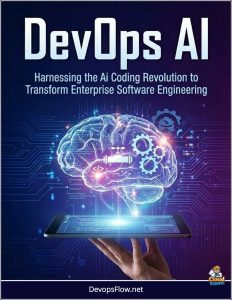 DevOps has advanced into what Microsoft describes as agentic DevOps, where intelligent AI agents function as collaborative teammates throughout the entire software lifecycle—from planning and coding to testing, deployment, and ongoing operations.
Microsoft leads this shift through its tightly integrated ecosystem of GitHub and Azure services, combining powerful generative AI with enterprise-grade security, full traceability, and scalable infrastructure.
Teams adopting these capabilities experience significantly faster delivery cycles, reduced manual effort, and improved code quality, all while preserving essential human oversight through mandatory reviews and governance controls.
Github Copilot
At the core of this transformation stands GitHub Copilot, Microsoft’s flagship AI developer tool. Powered by advanced models, Copilot has evolved well beyond simple code autocompletion into a fully agentic coding companion.
Developers can now assign complex, multi-step tasks directly in their IDEs—such as implementing features with authentication, writing comprehensive tests, or modernizing legacy codebases—and watch as the agent autonomously creates branches, generates code, opens draft pull requests, and iterates based on feedback.
Specialized agents handle targeted workloads like application modernization for Java or .NET systems, while the coding agent tackles broader engineering challenges.
For Azure users, the dedicated Copilot for Azure extension in Visual Studio Code enables seamless interaction with cloud resources, allowing teams to query infrastructure, generate deployment scripts, troubleshoot issues, and manage services like AKS clusters straight from the chat interface. In enterprise settings, organization-wide custom instructions ensure alignment with coding standards, security policies, and architectural guidelines, delivering substantial productivity gains—often up to 55% faster coding—while maintaining control through standard pull request processes.
Azure DevOps
Microsoft has strengthened the bridge between GitHub and Azure DevOps, enabling hybrid environments where teams retain familiar Azure tools for planning and orchestration while harnessing GitHub’s AI-native strengths for code and automation.
The Azure DevOps Model Context Protocol (MCP) Server, now generally available, provides Copilot with deep organizational awareness, allowing it to read and act on Azure Boards work items, pull requests, builds, releases, and other artifacts without leaving the developer’s IDE.
A standout capability lies in the Azure Boards integration with GitHub Copilot, which reached general availability and expanded to support custom agents. From any work item—whether a user story, bug, or task—developers can initiate a pull request powered by Copilot.
The selected agent (standard or custom, defined at the repository or organization level in GitHub) automatically creates a branch in the linked GitHub repository, implements the described changes using the work item’s details and acceptance criteria, opens a linked draft pull request, and updates the Azure Boards card with real-time progress and status indicators.
This workflow delivers end-to-end traceability from requirement to merged code while supporting hybrid setups that combine Azure Pipelines, Test Plans, and Boards with GitHub-hosted repositories and Copilot agents.
CI/CD
For CI/CD and release management, both Azure Pipelines and GitHub Actions benefit from AI assistance. Developers can generate complete YAML pipelines from natural-language descriptions, receive optimization suggestions for parallel execution or cost efficiency, and incorporate matrix strategies automatically.
GitHub Advanced Security embeds AI-driven code scanning, secret detection, and dependency vulnerability checks directly into workflows, while Azure Pipelines integrates natively with GitHub repositories and agent-generated code for seamless deployment to Azure environments.
Security and compliance remain foundational in this AI-enhanced approach. GitHub Advanced Security provides automated vulnerability fixes and posture improvements, complemented by Microsoft Defender for Cloud, which identifies AI workloads, generates AI Bills of Materials, analyzes attack paths, and offers targeted recommendations. Built-in tools like CredScan, Bandit, and Trivy integrate into pipelines, and Copilot Enterprise plans ensure customer data is never used for training, backed by extensive compliance certifications.
Operations extend the agentic model into production through Azure Monitor and related AIOps features. AI agents detect anomalies, predict scaling needs, perform root-cause analysis on incidents, and automate remediation. The Azure SRE Agent proactively monitors applications, suggests optimizations, enforces quality gates in pipelines, and can trigger rollbacks when necessary. Custom agents built with Azure OpenAI Service and Semantic Kernel further analyze logs and produce runbooks tailored to specific environments.
To implement AI-enhanced DevOps effectively, organizations typically start by enabling GitHub Copilot Enterprise across their IDEs and repositories. Setting up the Azure DevOps MCP Server provides immediate context gains, followed by connecting Azure Boards to GitHub via the official GitHub App. Piloting the Boards-to-Copilot workflow on low-risk features allows teams to validate the process before scaling.
Adding the Copilot for Azure extension supports infrastructure tasks, while embedding security scanning and AI-powered monitoring completes the loop. Best practices emphasize mandatory human review of agent-generated pull requests, consistent use of custom instructions for governance, and a gradual migration path—retaining Azure Boards and Pipelines while moving code to GitHub for maximum agentic capabilities.
Roadmap
Microsoft’s roadmap points toward even deeper native integration and multi-agent orchestration, solidifying the platform as a comprehensive foundation for AI-native software delivery.
Whether modernizing legacy systems, building cloud-native AI services, or scaling enterprise practices, GitHub Copilot combined with Azure DevOps offers one of the most mature and production-ready paths to agentic DevOps available today. Teams ready to embrace this evolution can begin with Copilot Enterprise and the MCP Server to unlock immediate value and position themselves at the forefront of intelligent software engineering.